- Unfazed or Unphased: Which Is Correct?
- What Does "Unfazed" Mean?
- What Does "Unphased" Mean?
- Unfazed vs Unphased: Understanding the Difference
- Why Do People Confuse "Unfazed" and "Unphased"?
- When Should You Use "Unfazed"?
- When Is "Unphased" Appropriate?
- Examples of Correct Usage
- Synonyms for Unfazed
- Tips to Remember the Difference
- Common Mistakes to Avoid
- Frequently Asked Questions
- Conclusion
Have you ever written “unphased” in a text or email only to wonder if it should actually be “unfazed”? You’re not alone. The confusion between unfazed or unphased is incredibly common because both words sound almost identical when spoken. However, they don’t mean the same thing—and in most cases, only one of them is correct.
If you’re trying to describe someone who remains calm, confident, or unaffected by a difficult situation, the correct word is unfazed. While unphased does exist in limited contexts, it’s usually a mistaken substitute for unfazed in everyday writing.
In this guide, we’ll compare unfazed vs unphased, explain the meanings of each word, show you when they’re appropriate, and provide plenty of examples so you’ll never mix them up again.
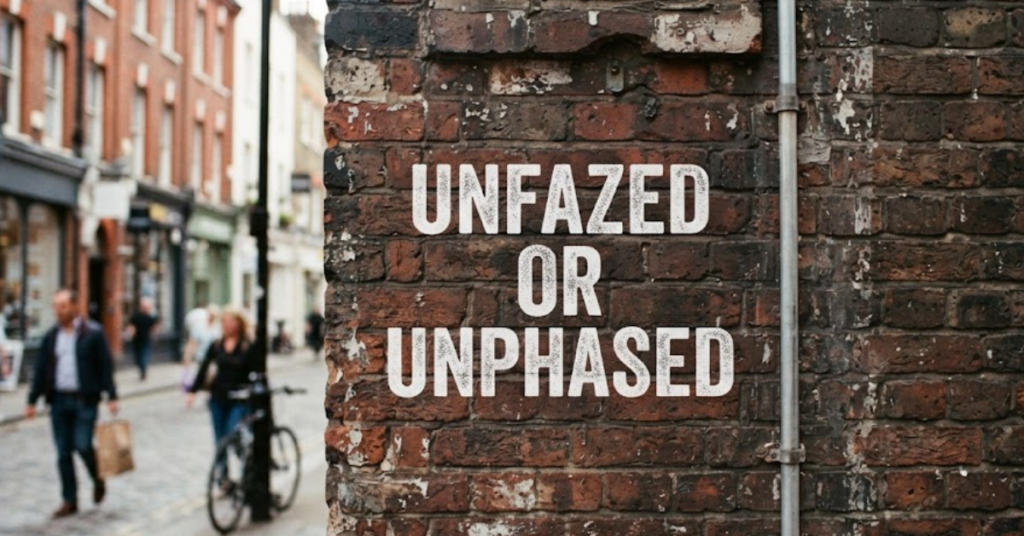
Unfazed or Unphased: Which Is Correct?
If you’re wondering “unfazed or unphased?”, here’s the short answer:
Unfazed — Usually correct
Unphased — Rarely correct and often used incorrectly
For example:
- She remained unfazed despite the criticism.
- He was completely unfazed by the unexpected delay.
- The experienced pilot stayed unfazed during turbulence.
In these examples, unphased would be incorrect.
What Does “Unfazed” Mean?
Unfazed means:
- Not disturbed
- Not worried
- Not intimidated
- Calm under pressure
- Unaffected by unexpected events
The word comes from the verb faze, which means to disturb, unsettle, or embarrass someone.
If something doesn’t faze you, you’re unfazed.
Examples:
- She remained unfazed after receiving negative comments.
- The athlete looked unfazed before the championship game.
- He was unfazed by the difficult interview questions.
What Does “Unphased” Mean?
Unlike unfazed, the word unphased is much less common.
Literally, unphased means not phased—that is, not moving from one phase or stage to another.
It may occasionally appear in technical or specialized contexts, such as:
- Engineering
- Physics
- Construction
- Project management
Examples:
- The project remained unphased despite scheduling changes.
- The phased rollout became unphased after revisions.
However, these uses are rare. In everyday English, people almost always intend to write unfazed.
Unfazed vs Unphased: Understanding the Difference
Although they sound alike, unfazed vs unphased have different origins and meanings.
| Word | Meaning | Common? |
| Unfazed | Calm, unaffected, not disturbed | Very common |
| Unphased | Not divided into phases or not phased | Rare and technical |
The confusion happens because:
- Faze and phase sound almost identical.
- Many people assume they’re related.
- Spellcheck may not always catch the mistake because phase is a correctly spelled word.
Why Do People Confuse “Unfazed” and “Unphased”?
There are several reasons why this mix-up happens.
1. They Sound the Same
In most English accents, faze and phase are pronounced identically.
As a result, many writers spell the word based on sound instead of meaning.
2. “Phase” Is a Familiar Word
People regularly encounter words like:
- Phase one
- Final phase
- Lunar phase
- Development phase
Since phase is so common, it’s easy to assume unphased is correct.
3. Autocorrect Doesn’t Always Help
Because phase is a correctly spelled English word, many spelling tools won’t automatically flag unphased as incorrect—even when unfazed is the intended word.
When Should You Use “Unfazed”?
Use unfazed whenever you want to describe someone who remains calm or unaffected.
Common situations include:
- Stressful events
- Criticism
- Challenges
- Public speaking
- Competition
- Emergencies
Examples:
- She was unfazed by the difficult exam.
- He stayed unfazed during the interview.
- The CEO remained unfazed despite the market downturn.
- The goalkeeper looked unfazed before the penalty kick.
When Is “Unphased” Appropriate?
The word unphased has legitimate uses, but they’re uncommon.
You may encounter it in specialized fields discussing:
- Phased construction
- Electrical systems
- Manufacturing processes
- Scientific models
- Software deployments
For example:
- The system changed from a phased implementation to an unphased rollout.
Outside these technical contexts, unfazed is almost always the word you want.
Examples of Correct Usage
Correct
- She was completely unfazed by the criticism.
- The firefighters remained unfazed during the emergency.
- He looked unfazed despite the unexpected announcement.
- Our captain stayed unfazed under pressure.
Incorrect (for everyday writing)
- She was completely unphased by the criticism.
- He seemed unphased during the interview.
- The audience remained unphased after the announcement.
In each of these cases, unfazed is the correct word because the meaning is “not disturbed.”
Synonyms for Unfazed
If you’d like to vary your writing, consider these alternatives:
- Calm
- Composed
- Collected
- Unshaken
- Unbothered
- Relaxed
- Cool-headed
- Self-assured
- Confident
- Steady
Each carries a slightly different nuance but can often replace unfazed depending on the context.
Tips to Remember the Difference
Here are a few easy tricks to help you choose the right word.
Think About “Fazed”
Ask yourself:
“Am I talking about someone being disturbed?”
If the answer is yes:
Fazed → Unfazed
Remember the Meaning
- Faze = Disturb
- Unfazed = Not disturbed
Ignore the Sound
Although faze and phase sound alike, they have different meanings and spellings.
Don’t rely on pronunciation alone.
Think About Phases
If you’re discussing project phases, construction phases, or scientific phases, unphased might be appropriate.
Otherwise, choose unfazed.
Common Mistakes to Avoid
Avoid these common errors.
I was unphased by the bad news.
I was unfazed by the bad news.
She remained unphased during the debate.
She remained unfazed during the debate.
The coach looked unphased after losing.
The coach looked unfazed after losing.
Frequently Asked Questions
Is it unfazed or unphased?
In almost every everyday situation, unfazed is the correct word. It means calm, composed, or unaffected by events.
Is “unphased” a real word?
Yes, but it has a limited meaning related to phases rather than emotions or reactions. It’s uncommon outside technical contexts.
Why do people write “unphased”?
Because faze and phase are pronounced the same, many people mistakenly choose the more familiar spelling.
What does unfazed mean?
Unfazed means not disturbed, not intimidated, or not emotionally affected by something.
Can I use “unphased” in professional writing?
Only if you’re genuinely discussing phases, phased systems, or technical processes. Otherwise, unfazed is the correct choice.
How can I remember the correct spelling?
Think:
Faze = Disturb
Unfazed = Not disturbed
This simple association makes the correct spelling easy to remember.
Is “unfazed” more common than “unphased”?
Yes. Unfazed is overwhelmingly more common in books, newspapers, business writing, and everyday conversation.
Does spellcheck always catch this mistake?
Not necessarily. Since phase is a correctly spelled word, some spellcheck tools may not recognize that unfazed was actually intended.
Conclusion
When comparing unfazed or unphased, the correct choice in almost every everyday situation is unfazed. It means remaining calm, composed, or unaffected by challenges, criticism, or unexpected events. Although unphased is a real word in certain technical contexts related to phases or staged processes, it’s rarely the right option in general writing.
The easiest way to remember the difference is to focus on the root word: faze means to disturb, so unfazed means not disturbed. By understanding this distinction, you’ll avoid one of the most common spelling mix-ups in English and write with greater confidence. If you’re looking to sharpen your grammar and vocabulary even further, explore our related guides on commonly confused words and English usage.