- What Is an Empanada de Atún, Anyway?
- What Makes a Great Empanada de Atún?
- Regional Styles Worth Knowing Before You Search
- How to Actually Find the Best Empanada de Atún Near You
- Red Flags to Watch For
- A Quick Case Study: What Separates a Great Spot From an Average One
- Bonus: Making Your Own Empanada de Atún
- Wrapping It Up
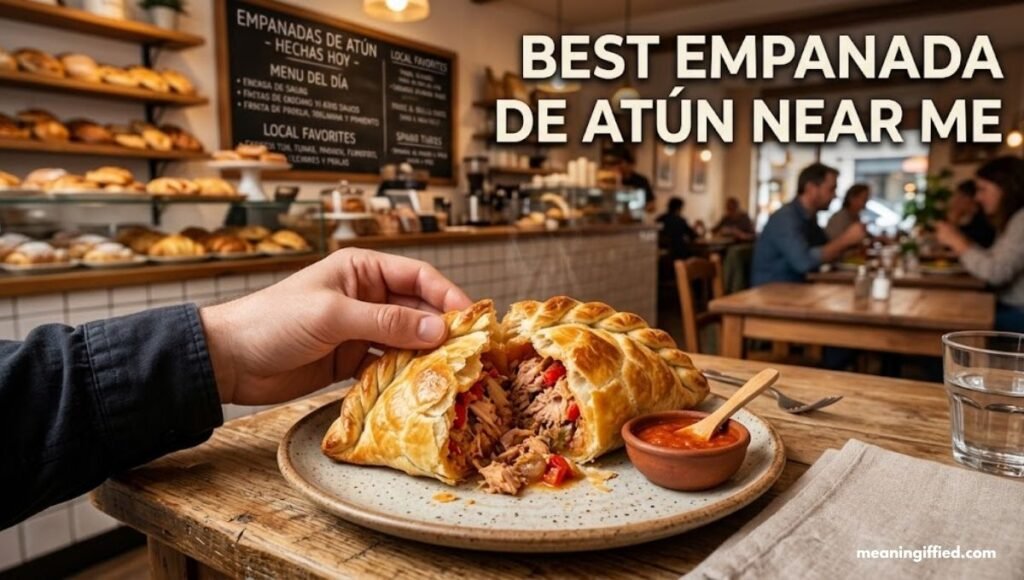
Picture this: you walk past a bakery, and the smell hits you before you even open the door. Warm dough, a hint of paprika, something savory baking away in the oven. You step inside, and there they are — golden, crimped little pockets lined up under the glass, practically begging to be eaten. That’s the moment you know you’re close to something good.
If you’ve ever typed “best empanada de atún near me” into your phone at 7 p.m. on a Tuesday because you suddenly needed one, you’re not alone. Tuna empanadas hold a strange kind of power. They’re humble, cheap, and portable, yet somehow they can taste like a five-star meal when done right — or like a sad, soggy mistake when done wrong.
This guide walks you through everything: what actually makes a tuna empanada great, where to look for one, red flags to avoid, and even how to make your own if your search comes up empty. By the end, you’ll know exactly what you’re looking for the next time hunger strikes.
What Is an Empanada de Atún, Anyway?
For anyone new to the empanada world, here’s the quick rundown. An empanada de atún is a stuffed pastry filled with tuna, usually mixed with onions, peppers, tomato, and sometimes olives or hard-boiled egg. The dough gets folded over the filling and sealed, then either baked or fried until golden.
They show up under different names and styles across the globe:
- Argentina and Chile — typically baked, with a butter-based dough and a crimped edge called a repulgue
- Colombia and Venezuela — often fried, using a cornmeal-based dough for a crispier bite
- Puerto Rico — known as pastelillos, usually fried and slightly sweeter in the dough
- The Philippines — influenced by Spanish colonization, often paired with a vinegar-based dipping sauce
- Spain — sometimes made as one large empanada (a savory pie) sliced into portions rather than individual hand pies
None of these versions is “more correct” than another. They’re regional cousins, each shaped by local ingredients and history. So when you’re searching for the best empanada de atún near you, it helps to know which style you’re actually craving.
What Makes a Great Empanada de Atún?
Not all tuna empanadas are created equal. Some are transcendent. Others taste like a can of tuna gave up halfway through becoming a meal. Here’s what separates the two.
The Crust Makes or Breaks It
The dough isn’t just a container — it’s half the experience. A great crust should be:
- Flaky, not doughy. You want layers that shatter slightly when you bite in, not a dense, bread-like chew.
- Golden and evenly baked (or fried), with no pale, undercooked spots.
- Properly sealed. A well-made empanada holds its filling. If the juices are leaking out before you even pick it up, that’s a bad sign.
Baked and fried versions offer genuinely different experiences, and neither is objectively better. Baked empanadas tend to taste lighter and more buttery, while fried ones bring a satisfying crunch and richer mouthfeel. It really comes down to personal preference.
The Filling Needs Balance
Here’s where a lot of empanadas fall apart sometimes literally. A mediocre filling tastes like plain canned tuna dumped into dough and called a day. A great filling, though, builds flavor in layers.
Look for these components:
- Quality tuna — flaked, not mushy, and not swimming in oil
- Aromatics — sautéed onion, garlic, and bell pepper form the flavor base
- A tomato or sofrito base — this adds moisture and depth without making the filling soggy
- Extras — olives, capers, or hard-boiled egg show up often and add texture and a little brininess
- Seasoning — cumin, paprika, oregano, or bay leaf, depending on the regional style
As one longtime empanada vendor in Miami put it during a local food segment: “People think it’s just tuna and dough. It’s not. It’s about what you build around the tuna.” That sentiment sums up the difference between forgettable and unforgettable.
Texture and Ratio Matter More Than You’d Think
Even with great ingredients, an empanada can miss the mark if the ratio’s off. Too much filling, and the dough turns soggy. Too little, and every bite feels like mostly crust. The best ones strike a balance where each bite delivers both texture and flavor in equal measure.
Regional Styles Worth Knowing Before You Search
Since “best empanada de atún near me” means different things depending on where you live and what tradition you’re craving, here’s a quick comparison table to help you figure out what you’re actually in the mood for.
| Style | Dough Type | Cooking Method | Common Add-ins | Flavor Profile |
|---|---|---|---|---|
| Argentine | Butter-based, flaky | Baked | Egg, olives, cumin | Rich, buttery, savory |
| Colombian | Cornmeal-based | Fried | Potato, scallions | Crispy, earthy, slightly sweet |
| Puerto Rican (Pastelillos) | Flour-based, thin | Fried | Sofrito, olives | Crispy, garlicky, bold |
| Filipino | Flour-based | Fried or baked | Raisins, potatoes | Sweet-savory, tangy vinegar dip |
| Spanish (Gallega) | Flour-based, large format | Baked | Bell peppers, paprika | Smoky, hearty, pie-like |
Knowing this ahead of time means you can search smarter. Instead of just typing “empanada near me,” try adding the style — “Argentine empanada de atún near me” or “fried tuna pastelillos near me” — to get results that actually match what you’re craving.
How to Actually Find the Best Empanada de Atún Near You
Now for the part you came here for. Finding a genuinely great empanada takes a little more effort than scrolling the first three results on Google Maps, but it’s not complicated. Here’s how to do it right.
Check Local Bakeries and Panaderías First
Family-run bakeries are often where the magic happens. These spots tend to make empanadas fresh throughout the day rather than in one giant batch that sits under a heat lamp for hours. A simple trick: ask the person behind the counter what time the last batch came out. If they say “just now,” that’s your sign.
Don’t Overlook Food Trucks and Street Vendors
Some of the best empanadas in any city come from a truck parked in a strip mall lot, not a sit-down restaurant. A long line or steady stream of regulars usually means the food’s worth the wait. Watch for visible turnover — empanadas being made and sold quickly, not sitting around.
Sit-Down Restaurants Offer a Fuller Experience
If you want to pair your empanada with a full meal, look for restaurants specializing in Latin American, Spanish, or Filipino cuisine. These spots often make empanadas as an appetizer, so the quality tends to be high since it’s meant to hook you before the entrée even arrives.
Use Online Tools the Smart Way
Search engines are useful, but only if you use them right. A few tips:
- Search within reviews, not just business names. Typing “empanada de atún” directly into Google Maps’ review search bar often surfaces mentions buried in customer feedback.
- Check Instagram and TikTok geotags for the neighborhood you’re in. Real customers post real food — often looking far less polished (and more honest) than a restaurant’s own menu photos.
- Browse local subreddits or Facebook groups. A quick search like “best empanadas [your city]” in a community forum often turns up opinions you won’t find on Yelp.
- Read the negative reviews, not just the positive ones. A pattern of complaints about “dry filling” or “soggy crust” tells you a lot fast.
Ask Real People
This one gets overlooked constantly. Baristas, coworkers, rideshare drivers, anyone from a culture where empanadas are a staple — these are goldmines of information. Word-of-mouth recommendations tend to be more reliable than star ratings because they come without the noise of fake reviews or promotional boosts.
Red Flags to Watch For
Not every empanada deserves your money. Here’s what to steer clear of:
- Greasy, translucent crust — usually a sign of old frying oil or poor technique
- Bland, one-note filling — if all you taste is plain tuna with nothing else going on, the kitchen skipped the seasoning step
- Heat-lamp fatigue — empanadas that have been sitting for hours lose their crispness and start tasting stale, even if they look fine
- Inconsistent shape or size — this often signals mass production over care, especially in places that make hundreds a day with little quality control
A good rule of thumb: if an empanada looks perfect but tastes like nothing, it probably came from a freezer, not a kitchen.
A Quick Case Study: What Separates a Great Spot From an Average One
To make this more concrete, let’s look at a hypothetical comparison based on common patterns found across highly rated bakeries versus average ones.
| Factor | Highly Rated Spot | Average Spot |
|---|---|---|
| Crust texture | Flaky, golden, consistent | Chewy or greasy |
| Filling flavor | Layered, seasoned, balanced | Bland, one-note |
| Freshness | Made in small batches throughout the day | Sits under heat lamp for hours |
| Reviews mention | “Crispy,” “flavorful,” “fresh” | “Dry,” “bland,” “soggy” |
| Price point | Often mid-range, reflecting quality ingredients | Sometimes cheaper, but at the cost of taste |
This pattern holds up across cities and cuisines. Price alone doesn’t guarantee quality, but a noticeable jump in care (fresh batches, seasoned filling, consistent shape) almost always correlates with better reviews and repeat customers.
Bonus: Making Your Own Empanada de Atún
If your search for the best empanada de atún near you comes up short, or you just want to compare, making them at home isn’t as hard as it sounds.
Here’s a simple approach:
- Start with the dough. Store-bought empanada wrappers (found in the frozen aisle of most Latin grocery stores) work fine if you’re short on time. Otherwise, a basic dough of flour, butter, egg, and a splash of water comes together in under 20 minutes.
- Build the filling. Sauté onion, garlic, and bell pepper until soft. Add canned tuna (drained), a spoonful of tomato paste or sofrito, and season with cumin, paprika, and a pinch of salt. Let it cool before assembling.
- Assemble and seal. Spoon the filling onto one half of each dough round, fold over, and crimp the edges with a fork or your fingers.
- Cook your way. Bake at 400°F for about 20 minutes, or fry in oil heated to 350°F until golden, about 3–4 minutes per side.
- Serve warm, ideally with a squeeze of lime or a simple dipping sauce.
Homemade versions let you control the seasoning, the tuna quality, and the crust style completely — which is honestly a great way to figure out exactly what you like before heading back out to search for the best empanada de atún near you again.
Wrapping It Up
Finding a truly great tuna empanada is part science, part detective work, and part trusting your gut (and your nose). Look for a flaky, golden crust, a filling with real depth of flavor, and freshness you can practically smell from the door. Avoid the greasy, bland, heat-lamp versions, and don’t be afraid to ask locals for their honest opinion instead of relying purely on star ratings.
Whether you end up at a family-run panadería, a food truck with a line out the door, or your own kitchen counter, the goal’s the same: a bite that makes you close your eyes for just a second before you go back for more.
Got a favorite spot for empanada de atún in your city? Drop it in the comments below — future empanada hunters will thank you.