- Oversight vs Oversite: The Quick Answer
- What Does “Oversight” Mean?
- What Does “Oversite” Mean?
- Oversite vs Oversight: Main Difference
- Oversight or Oversite: Which Should You Use?
- Examples of “Oversight” in Sentences
- Examples of “Oversite” in Sentences
- Why Do People Confuse Oversite and Oversight?
- Is “Oversite” a Misspelling of “Oversight”?
- Oversight vs Oversite in Professional Writing
- Common Mistakes to Avoid
- A Simple Memory Trick
- Frequently Asked Questions
- Conclusion: Oversight or Oversite?
One missing letter can completely change a word’s meaning. That is especially true when comparing oversite vs oversight, two terms that look almost identical but are used in very different ways.
If you’re wondering whether oversite or oversight is correct, the answer depends on what you are trying to say. Oversight is the standard word when you mean supervision or an accidental failure to notice something. Oversite is a much less common technical term, usually associated with construction and building work.
Let’s break down the difference so you can use each word confidently.
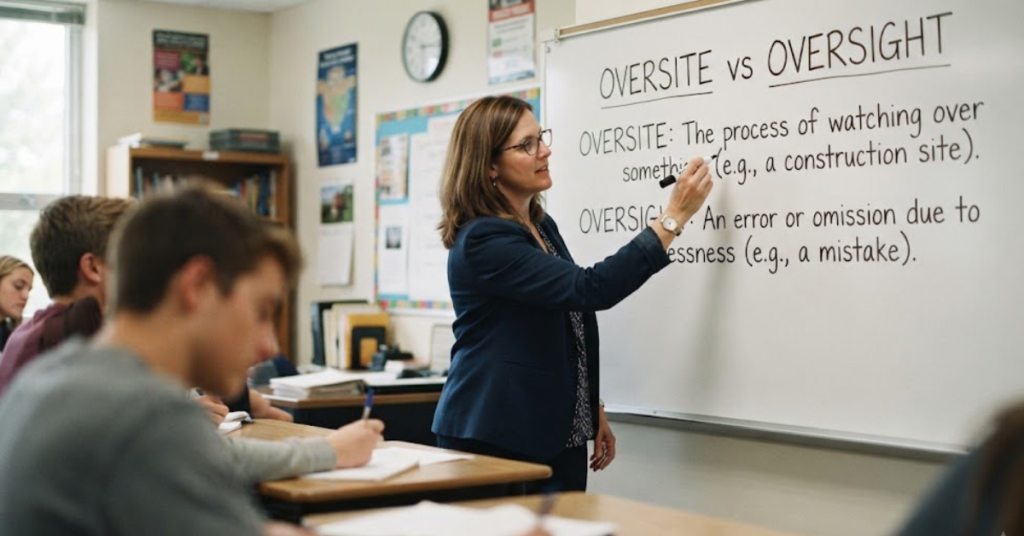
Oversight vs Oversite: The Quick Answer
The two words have different meanings and should not normally be treated as interchangeable.
| Word | Meaning | Common Use |
| Oversight | Supervision, monitoring, or an accidental omission | Business, government, work, everyday English |
| Oversite | A construction-related layer or material placed over ground | Construction and building |
If you mean supervision or a mistake caused by failing to notice something, the correct word is oversight.
For example:
The project requires careful oversight.
Or:
Leaving his name off the list was an oversight.
If you’re talking about a specific construction term, oversite may be the appropriate word.
What Does “Oversight” Mean?
Oversight is the far more common word in modern English. It has two closely related meanings.
Oversight Meaning: Supervision
In one sense, oversight means the act of watching, managing, or supervising something.
For example:
The committee provides oversight of the organization’s finances.
Here, oversight means supervision or monitoring.
You might also hear the word in phrases such as:
- government oversight
- regulatory oversight
- financial oversight
- managerial oversight
- administrative oversight
- independent oversight
In these contexts, oversight usually refers to someone having responsibility for monitoring activities and making sure rules or standards are followed.
Oversight Meaning: An Unintentional Mistake
Oversight can also mean something that was accidentally missed or forgotten.
For example:
Leaving the attachment out of the email was an oversight.
The person didn’t deliberately leave out the attachment. They simply failed to notice that it was missing.
Other examples include:
- The missing signature was an oversight.
- Forgetting to update the address was an oversight.
- The error appears to have been an oversight.
- It was an unfortunate oversight on my part.
This meaning is extremely common in everyday English.
What Does “Oversite” Mean?
Oversite is a much less common word. It is primarily used as a construction and building term.
In construction contexts, oversite can refer to a layer or material placed over prepared ground, often as part of a floor or foundation system. The exact usage can vary depending on regional construction terminology.
For example, a construction professional might refer to an oversite concrete layer associated with a building’s ground floor.
Because the word is specialized, you are much less likely to encounter oversite in ordinary conversation or general business writing.
Oversite in Construction
In building terminology, oversite can be associated with work carried out over the prepared ground beneath a floor.
Depending on the construction method, the process may involve:
- Preparing and leveling the ground.
- Adding appropriate sub-base or fill materials.
- Installing a suitable layer or slab.
- Continuing with the floor construction.
The exact specification depends on the building design, materials, local standards, and construction practice.
So, if you’re writing about a building project, oversite may be the technical term you need.
Oversite vs Oversight: Main Difference
The easiest way to understand oversite vs oversight is to look at their meanings.
Oversight
Think:
supervision or something accidentally missed
Examples:
The board provides financial oversight.
The missing document was an oversight.
Oversite
Think:
construction terminology
Example:
The contractor prepared the oversite before continuing with the floor construction.
These words may look similar, but they are not simply alternative spellings of the same word.
Oversight or Oversite: Which Should You Use?
If you’re writing a normal email, article, report, essay, or business document, oversight is probably the word you’re looking for.
Use oversight when you mean:
- supervision
- monitoring
- management
- review
- regulatory control
- an accidental omission
- something unintentionally forgotten
Use oversite when you’re specifically discussing its technical construction meaning.
A simple test can help:
Does the sentence mean “supervision” or “something was accidentally missed”?
If yes, use oversight.
Is the sentence specifically about construction or building work?
If yes, oversite may be appropriate.
Examples of “Oversight” in Sentences
Here are some natural examples showing both meanings of oversight.
Oversight as Supervision
- The agency operates under government oversight.
- The manager is responsible for oversight of the department.
- The committee provides independent oversight.
- Financial oversight is essential for the organization.
- The project requires close oversight.
Oversight as an Omission
- Forgetting to attach the document was an oversight.
- The missing information was an oversight.
- I apologize for the oversight.
- The error was caused by a simple oversight.
- Failing to include her name was an oversight.
Notice how the context makes the meaning clear.
Examples of “Oversite” in Sentences
Because oversite is a specialized term, it generally appears in construction-related contexts.
Examples include:
- The contractor prepared the oversite before installing the floor.
- The building plans included details for the oversite construction.
- The engineer inspected the oversite before the next stage began.
- The construction team completed the oversite layer according to the project specifications.
When using this word in a technical document, it is important to follow the terminology used by the relevant construction standards and professionals.
Why Do People Confuse Oversite and Oversight?
The confusion is understandable because the words differ by only one letter.
Both begin with over-, and both can appear in technical or professional writing. In addition, oversite is uncommon enough that spell-checkers or readers may interpret it as a misspelling of oversight.
Pronunciation can contribute to the confusion as well, particularly when someone has encountered the words mainly through speech rather than writing.
The safest approach is to identify the meaning first and choose the spelling afterward.
Is “Oversite” a Misspelling of “Oversight”?
Not necessarily.
Oversite can be a legitimate word when it is being used in its specialized construction sense. However, it is not the standard spelling of oversight.
For example:
The manager provides oversite of the department.
The manager provides oversight of the department.
But:
The contractor worked on the oversite before the floor was installed.
In a construction context, oversite may be intentional and correct.
Oversight vs Oversite in Professional Writing
Choosing the right word matters because the two terms can communicate completely different ideas.
In Business Writing
Use oversight:
The director has oversight of the company’s operations.
In Government or Policy Writing
Use oversight:
The committee is responsible for regulatory oversight.
In an Apology
Use oversight:
We apologize for the oversight.
In Construction Writing
Oversite may be appropriate:
The oversite was prepared before the next phase of construction.
When in doubt, check the terminology used by the relevant industry or project documentation.
Common Mistakes to Avoid
Here are some of the most common errors involving these words.
Mistake 1: Using “Oversite” for Supervision
The manager has oversite of the team.
The manager has oversight of the team.
Mistake 2: Using “Oversite” for an Accidental Error
Forgetting the attachment was an oversite.
Forgetting the attachment was an oversight.
Mistake 3: Assuming Oversite Is Always Wrong
“Oversite” is never a real word.
That’s too broad. Oversite can be a legitimate technical construction term.
The important point is that it is not a replacement for the ordinary word “oversight.”
A Simple Memory Trick
Here’s an easy way to remember the difference:
Oversight = watch or miss
- You watch over something → oversight as supervision.
- You miss something → oversight as an omission.
Oversite = construction site
The site connection can help remind you that oversite is associated with construction terminology.
This isn’t a linguistic rule, but it is a useful memory aid.
Frequently Asked Questions
Is it oversight or oversite?
Both words exist, but they have different meanings. Oversight is used for supervision or an accidental omission, while oversite is a specialized construction term.
Is “oversite” a correct word?
Yes, oversite can be a correct technical term in construction. However, it should not be used as an alternative spelling of oversight.
What is the difference between oversight and oversite?
Oversight means supervision or an accidental failure to notice something. Oversite is a specialized term associated with construction work.
Is “oversite” a misspelling?
It depends on the context. If you mean supervision or an accidental mistake, oversite is the wrong spelling and oversight is correct. In construction terminology, however, oversite can be a legitimate word.
Which is correct: oversight or oversite?
For everyday English, oversight is usually correct. Use oversite only when you specifically mean the construction-related term.
What does oversight mean?
Oversight has two common meanings: supervision or monitoring, and an unintentional mistake or omission.
For example:
The board provides oversight of the project.
Or:
Forgetting the deadline was an oversight.
What does oversite mean?
Oversite is a relatively uncommon construction term referring to work or material associated with the prepared ground beneath a building floor. Its precise use can depend on construction practice and regional terminology.
Can oversight mean a mistake?
Yes. Oversight can mean an unintentional mistake caused by failing to notice or remember something.
Leaving the name off the document was an oversight.
Conclusion: Oversight or Oversite?
The difference between oversite vs oversight comes down to meaning and context.
Oversight is the word you’ll use most often. It can mean supervision or monitoring, or it can describe something accidentally missed or forgotten.
Oversite, meanwhile, is a much less common technical term associated with construction and building work.
So, if you’re writing a business email, report, article, or everyday sentence and you’re wondering whether to use oversight or oversite, oversight is almost certainly the correct choice unless you’re specifically discussing construction terminology.