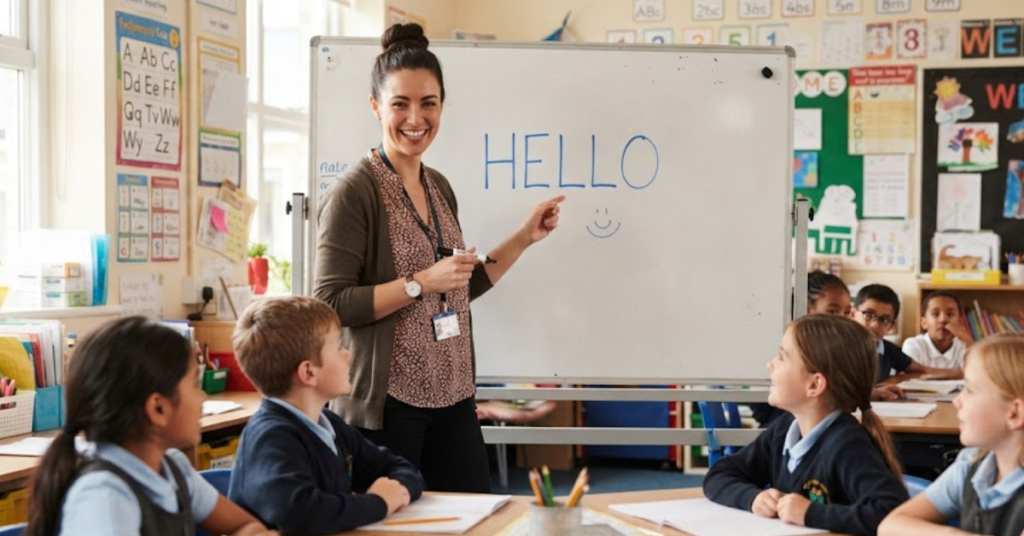
The first word you say can shape an entire conversation. That’s why the one word greeting hello remains one of the most recognizable and widely used greetings in the English language. Whether you’re meeting someone in person, answering the phone, or starting an email, this simple word has become a universal way to begin a conversation.
In this guide, you’ll learn where “hello” came from, why it’s so effective, when to use it, and how it compares with other common greetings. You’ll also discover situations where another greeting may be a better choice.
What Is the One Word Greeting “Hello”?
“Hello” is a single-word greeting used to acknowledge someone’s presence or begin a conversation. It is suitable for both spoken and written communication and works in formal, informal, and professional settings.
Unlike greetings that depend on the time of day, such as “good morning” or “good evening,” “hello” can be used almost anytime.
Examples include:
- Hello! How are you?
- Hello, it’s nice to meet you.
- Hello everyone, welcome to today’s meeting.
Its simplicity and versatility have made it one of the most common greetings worldwide.
The History of “Hello”
Although “hello” feels timeless, it became popular in the late 19th century.
One major reason for its widespread use was the invention of the telephone. Early telephone users needed a clear word to begin conversations, and “hello” quickly became the preferred greeting.
Before that, people often greeted each other with expressions like:
- Good day
- Greetings
- How do you do?
- Hail
Over time, “hello” became the standard opening in both personal and professional communication.
Why Is “Hello” So Popular?
Several qualities explain its lasting popularity.
It’s Universal
People across the world recognize “hello,” even if English isn’t their first language.
It’s Neutral
The greeting doesn’t sound overly formal or overly casual, making it appropriate for many situations.
It’s Easy to Remember
As a single, familiar word, it’s simple to pronounce and understand.
It Creates a Friendly First Impression
Starting a conversation with a warm greeting immediately signals politeness and openness.
One Word Hello Greeting in Different Situations
The one word hello greeting works well in many everyday situations.
In Professional Settings
Use it when:
- Answering business calls
- Greeting coworkers
- Beginning meetings
- Responding to clients
Example:
“Hello, thank you for calling.”
In Everyday Conversation
Friends, neighbors, and acquaintances frequently use “hello” when meeting in person.
Examples:
- Hello! How have you been?
- Hello there!
In Emails
Many professional emails begin with:
- Hello Sarah,
- Hello John,
- Hello everyone,
This creates a polite yet approachable tone.
In Video Meetings
Virtual meetings often begin with a simple:
“Hello everyone.”
It’s friendly, efficient, and appropriate for groups.
Alternatives to “Hello”
Although “hello” works almost everywhere, different situations may call for different greetings.
Some popular alternatives include:
Formal Greetings
- Good morning
- Good afternoon
- Good evening
- Greetings
Casual Greetings
- Hi
- Hey
- Hi there
- What’s up?
- How’s it going?
Professional Greetings
- Welcome
- Nice to meet you
- Pleased to meet you
Choosing the right greeting depends on your relationship with the listener and the setting.
When Should You Use “Hello”?
“Hello” is appropriate in many situations, including:
- Meeting someone for the first time.
- Answering the phone.
- Starting a conversation.
- Greeting coworkers.
- Beginning an email.
- Welcoming guests.
- Joining online meetings.
Its flexibility makes it one of the safest greetings in English.
Common Greeting Mistakes
While “hello” is simple, a few mistakes can affect how it’s received.
Avoid these common issues:
- Using an overly casual greeting in formal situations.
- Forgetting to greet someone before asking a question.
- Choosing slang in professional communication.
- Ignoring cultural expectations in international settings.
A thoughtful greeting helps create a positive first impression.
Tips for Making Greetings More Natural
Want your conversations to sound warmer?
Try these simple techniques:
- Smile when greeting someone in person.
- Make eye contact if appropriate.
- Use the person’s name after saying hello.
- Match your tone to the situation.
- Speak clearly and confidently.
Small details can make even the simplest greeting feel more genuine.
Frequently Asked Questions
What is a one word greeting hello?
It refers to the single-word greeting “hello,” which is commonly used to begin conversations, acknowledge someone, or answer the phone.
Is “hello” formal or informal?
It can be both. “Hello” is considered neutral, making it suitable for formal business settings as well as casual conversations.
What is another one-word greeting?
Other one-word greetings include:
- Hi
- Greetings
- Welcome
- Hey (informal)
Each carries a slightly different tone.
Why is “hello” so common?
Its versatility, simplicity, and universal recognition have made it one of the most widely used greetings in the English-speaking world.
Can I use “hello” in professional emails?
Yes. Beginning an email with “Hello” followed by the recipient’s name is both polite and professional.
Is “hello” used around the world?
Yes. Even in countries where English isn’t the primary language, many people recognize and use “hello” because of its global popularity.
Conclusion
The one word greeting hello has remained popular for generations because it’s simple, polite, and remarkably versatile. Whether you’re introducing yourself, answering a phone call, writing an email, or welcoming someone to a meeting, it provides a friendly and respectful way to start a conversation.
While many other greetings exist, few are as universally understood or as adaptable as “hello.” Learning when and how to use it—and when another greeting may be more appropriate—can help you communicate more confidently in both personal and professional settings. If you’re interested in improving your communication skills, consider exploring other common English greetings, conversation starters, and etiquette tips.