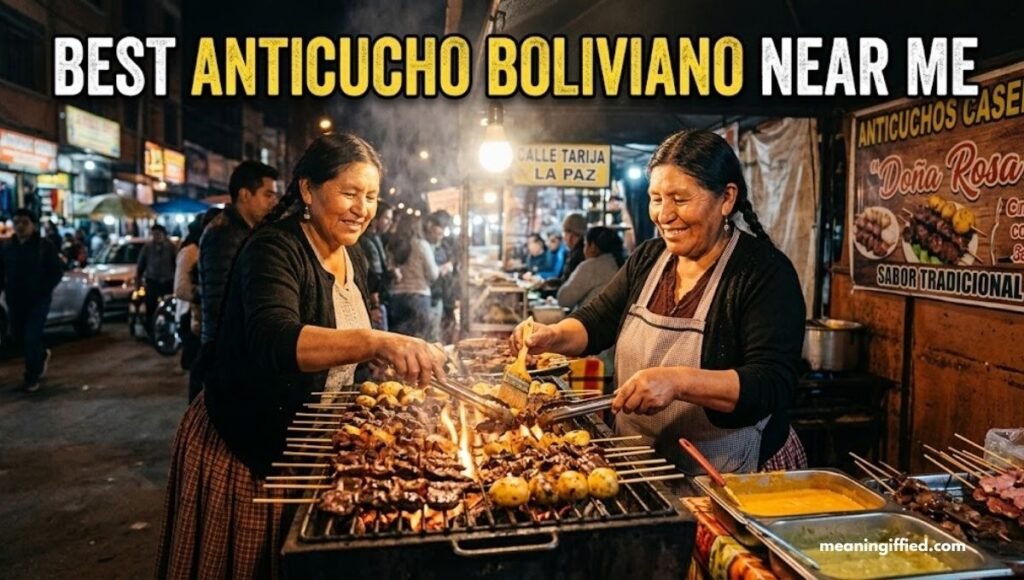
There’s a specific kind of hunger that hits when you catch a whiff of charcoal smoke and cumin drifting from somewhere down the street. You don’t even need to see the cart. Your stomach already knows. That’s the pull of anticucho boliviano, and if you’ve ever chased that smell around a neighborhood at 9 p.m. looking for its source, you already understand why so many people type “best anticucho boliviano near me” into Google with genuine urgency.
Here’s the problem, though. Not everything labeled “anticucho” delivers the real Bolivian experience. Plenty of spots serve a Peruvian-style version instead, which is delicious in its own right but isn’t quite the same dish. Others cut corners on the marinade, skip the charcoal grill entirely, or swap out the traditional protein for something easier to source. If you’ve been burned by a lackluster skewer before, you know the disappointment is real.
This guide walks you through what anticucho boliviano actually is, why it tastes the way it does, and most usefully how to track down the best anticucho boliviano near me searches are supposed to lead you to. By the end, you’ll know exactly what separates an unforgettable skewer from a forgettable one.
What Is Anticucho Boliviano, Exactly?
At its core, anticucho boliviano is skewered meat, marinated in a blend of vinegar, garlic, cumin, and ají chili, then grilled over open charcoal until the outside chars and the inside stays tender. Traditionally, the meat of choice is beef heart, though you’ll find variations using other cuts in places where heart isn’t as readily available or as culturally familiar to diners.
It’s typically served with a boiled potato on the side, sometimes a piece of bread, and almost always accompanied by a spicy sauce either llajwa, a fresh tomato-and-chili salsa, or a peanut-based sauce called salsa de maní. The combination of smoky meat, starchy potato, and bright, spicy sauce is what makes the dish so satisfying. It hits savory, smoky, and spicy notes all at once, which is probably why it’s such a popular late-night street food across Bolivia.
In cities like La Paz and Cochabamba, anticucho carts come alive after dark. Vendors set up small charcoal grills on street corners, and the smoke alone acts as a kind of advertisement. Locals often have a specific cart they swear by, sometimes one that’s been run by the same family for decades.
Anticucho Boliviano vs. Anticucho Peruano
This is where a lot of confusion happens, and honestly, it’s worth clearing up before you go searching for a restaurant. Peru also has a famous anticucho tradition, and the two dishes share DNA but aren’t identical twins.
| Feature | Anticucho Boliviano | Anticucho Peruano |
|---|---|---|
| Primary protein | Beef heart (corazón) | Beef heart, though beef, chicken variations exist too |
| Marinade base | Vinegar, garlic, cumin, ají | Vinegar, ají panca, garlic, sometimes beer |
| Signature sauce | Llajwa or peanut sauce | Ají amarillo sauce |
| Common sides | Boiled potato, bread | Boiled potato, choclo (corn), sometimes yuca |
| Serving style | Street cart, evening hours | Street cart or restaurant, varies by region |
If a menu describes ají amarillo sauce or emphasizes choclo as the main side, you’re probably looking at the Peruvian version. Neither one is “better” they’re just different traditions worth knowing apart, especially if you’re hoping for the Bolivian version specifically.
A Brief History and Why It Matters
Anticuchos didn’t appear out of nowhere. Food historians trace grilled, skewered meat back to pre-Columbian Andean cooking traditions, long before Spanish colonization introduced new spices, vinegar, and cooking techniques to the region. Over centuries, those two culinary threads wove together into the anticucho we recognize today.
The choice of heart as the primary protein wasn’t random, either. Historically, using the whole animal including organ meats reflected both resourcefulness and necessity. Heart meat is lean, flavorful, and holds up well to marinating and grilling, which made it a practical and popular choice among working-class communities where anticuchos first flourished as street food.
Knowing this history changes how you evaluate a restaurant claiming to serve “authentic” anticucho boliviano. A place that swaps in steak because heart is harder to source, or skips the peanut sauce because it takes longer to prepare, isn’t necessarily doing anything wrong. But it is offering a shortcut version. If authenticity matters to you, that context is worth carrying into your search.
“Anticuchos are proof that some of the best food in the world came from making the most of what you had, not from having everything you wanted.”
That sentiment shows up again and again in conversations with home cooks and street vendors throughout Bolivia, and it’s a good lens for judging any anticucho you’re about to order.
What Makes a Truly Great Anticucho Boliviano
If you want to separate the good from the forgettable, pay attention to a handful of specific details. Think of this as a mental checklist you can run through the moment you spot a menu or a smoking grill.
The marinade matters more than anything else. A proper anticucho marinade needs vinegar for acidity, garlic for depth, cumin for warmth, and ají for heat. Skip any one of these, and the flavor falls flat. You’ll taste the difference immediately a well-marinated skewer has layers, while a rushed one just tastes like grilled meat with salt on it.
The grill has to be charcoal, not gas. This isn’t snobbery. Charcoal produces a specific smoky char that a flat-top or gas grill simply can’t replicate. If you can see or smell charcoal smoke, that’s a strong signal you’re in good hands.
The sauce shouldn’t be an afterthought. Llajwa or peanut sauce isn’t a garnish here it’s practically part of the dish’s identity. A vendor who makes their own sauce fresh, rather than serving something bottled or overly sweetened, usually cares about getting the rest of the dish right too.
The sides should feel intentional. Boiled potato is traditional for a reason its mild, starchy flavor balances the smoky, spicy meat. Bread sometimes joins it. If a place substitutes fries or skips sides altogether, it may be adapting the dish for a different audience, which isn’t necessarily bad, just worth knowing before you order.
The texture tells you everything about the cook’s skill. Properly prepared beef heart should be tender with a slight chew, never rubbery or tough. Overcooked heart turns into a workout for your jaw, and that’s usually a sign the kitchen doesn’t have much experience with the cut.
Here’s a quick-reference table you can basically keep in your back pocket:
| What to Look For | Good Sign | Red Flag |
|---|---|---|
| Grill type | Charcoal, visible smoke | Gas or flat-top only |
| Sauce | Fresh llajwa or peanut sauce | Bottled hot sauce or none |
| Meat texture | Tender with slight chew | Tough, rubbery |
| Sides | Boiled potato, bread | No sides, or unrelated substitutes |
| Menu language | Mentions “corazón” or “llajwa” | Vague “grilled skewers” description |
How to Find the Best Anticucho Boliviano Near You
This is the part most people actually came here for, so let’s get practical. Finding great anticucho boliviano near me isn’t always as simple as searching a generic term, because a lot of search engines and review platforms lump anticuchos together regardless of country of origin. A few strategies help you cut through the noise.
Search with specific terms. Instead of just typing “anticuchos,” search “anticucho boliviano” directly. This filters out a chunk of Peruvian-style-only results and points you toward vendors who specifically identify with the Bolivian tradition.
Check community groups before you check Google. A lot of the best anticucho comes from home cooks or informal pop-up vendors who don’t have a polished web presence. Bolivian community Facebook groups, WhatsApp channels, and local cultural associations are goldmines here. Someone in the group has almost certainly posted about their go-to spot.
Visit Bolivian grocery stores or markets. Even if the store itself doesn’t sell anticuchos, the staff or fellow shoppers usually know exactly who does. These stores act as informal community hubs, and asking around is a completely normal, welcomed thing to do.
Read reviews with a critical eye. Skim through reviews looking specifically for mentions of “corazón” or “llajwa.” When a reviewer uses that kind of specific, accurate terminology, it’s a strong sign they know the dish well and their opinion carries more weight than a generic five-star rating.
Time your search around evening hours. Many of the best anticucho vendors operate as street carts rather than formal restaurants, which means they often only show up in the evenings or on weekends. If you’re searching midday and coming up empty, that’s not necessarily a dead end it might just mean you’re searching at the wrong hour.
Trust the crowd, not just the storefront. A cart with a line of people waiting, even if it looks unassuming, usually beats a polished restaurant with an empty dining room. Regulars don’t line up for mediocre food.
Questions to Ask Before You Order
If you’re standing in front of an unfamiliar vendor or restaurant, a few quick questions can save you from a disappointing meal:
- Is the meat beef heart, or has it been substituted with something else?
- Is the sauce made in-house, or is it store-bought?
- Do you grill over charcoal?
- How long have you been making anticuchos?
Most vendors, especially the proud ones, are happy to answer these. If someone hesitates or seems unsure, that alone tells you something.
Frequently Asked Questions
Is anticucho boliviano the same as Peruvian anticucho?
Not quite. They share a common ancestor and both typically use beef heart, but the marinades, sauces, and traditional sides differ. Bolivian versions lean on llajwa or peanut sauce, while Peruvian versions often feature ají amarillo sauce and choclo.
What does anticucho boliviano taste like if you’ve never had heart before?
Beef heart has a flavor similar to a lean, slightly denser cut of beef, without the strong “organ meat” taste some people expect. When marinated and grilled properly, it’s tender, smoky, and savory, closer to a well-seasoned steak than anything unusual.
Is anticucho boliviano spicy?
It can be, depending on how much ají goes into the marinade and how spicy the accompanying sauce is. Llajwa in particular can pack real heat, so if you’re sensitive to spice, ask before you dig in.
Can I find a vegetarian or alternative-protein version?
Traditional anticucho boliviano centers on beef heart, but some modern vendors offer alternatives using chicken, beef steak, or even mushrooms for a vegetarian take. These aren’t traditional, but they do exist if you’re looking for options.
What’s the best drink pairing?
Chicha morada, a sweet purple corn beverage, pairs nicely with the smoky, spicy flavors. A cold beer works well too, especially given the street-food, evening-eating context anticuchos usually come with.
Final Thoughts
The best anticucho boliviano rarely comes from the flashiest-looking restaurant. More often, it’s the unassuming cart with a line of regulars, a cloud of charcoal smoke, and a vendor who’s been perfecting the same recipe for years. Trust the smell. Trust the crowd. And don’t be afraid to ask a few questions before you commit to a skewer.
Next time you search for the best anticucho boliviano near me, you’ll know exactly what separates the real deal from a decent imitation, and honestly, that knowledge makes the whole experience taste even better.
Got a favorite local spot you swear by? Drop it in the comments, or check out our related guide on homemade llajwa for a taste of Bolivia you can make in your own kitchen.