- Hopeing or Hoping: Which Is Correct?
- How Do You Spell Hoping?
- Why Is "Hoping" Correct?
- What Does "Hoping" Mean?
- Why Do People Write "Hopeing"?
- The Grammar Rule Behind Hoping
- Are There Any Exceptions?
- Examples of Correct Usage
- Common Words That Follow the Same Rule
- Tips to Remember the Correct Spelling
- Common Expressions Using "Hoping"
- Frequently Asked Questions
- Conclusion
English spelling can be tricky, especially when adding -ing to verbs that end with the letter e. One of the most common questions people ask is hopeing or hoping. If you’ve ever paused while typing an email or writing a school assignment, you’re not alone.
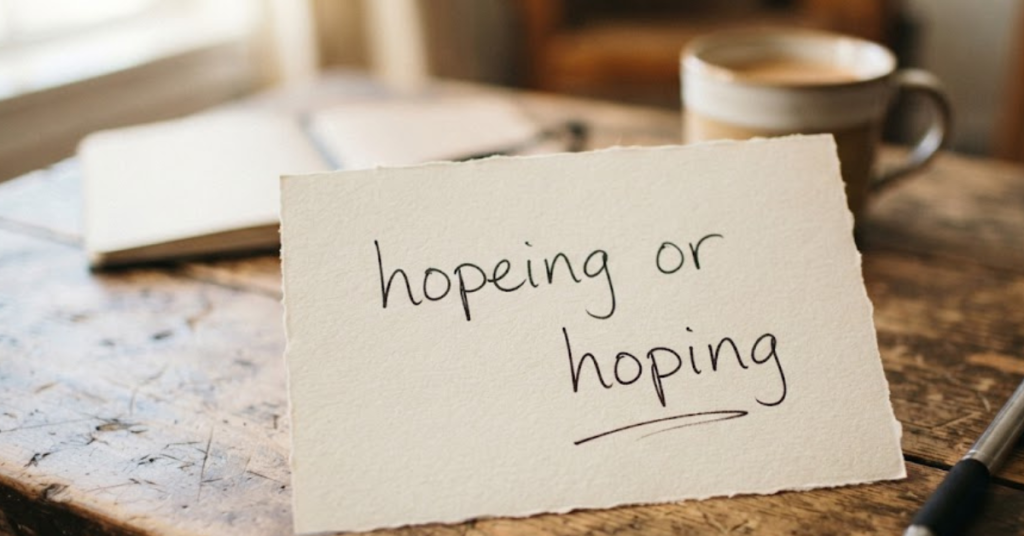
The correct spelling is hoping. The word hopeing is a spelling mistake and isn’t recognized in standard English. Understanding the grammar rule behind this spelling will help you avoid similar mistakes with many other words.
In this guide, we’ll explain the difference between hopeing or hoping, show you how to spell hopeing correctly, discuss the grammar rule, provide real-world examples, and answer the most frequently asked questions.
Hopeing or Hoping: Which Is Correct?
If you’re wondering “hopeing or hoping?”, the answer is simple:
Hoping — Correct
Hopeing — Incorrect
Examples:
- I’m hoping the weather stays nice.
- She’s hoping to get the job.
- We’re hoping everything goes according to plan.
The spelling hopeing is incorrect and should be avoided in all forms of writing.
How Do You Spell Hoping?
Many people search “how do you spell hoping” or “spell hoping” because the spelling isn’t immediately obvious.
The correct spelling is:
H-O-P-I-N-G
Notice that the silent e from hope is removed before adding -ing.
Incorrect:
- Hopeing
Correct:
- Hoping
Why Is “Hoping” Correct?
The answer lies in a common English spelling rule.
When a verb ends in a silent e, you usually:
- Remove the final e
- Add -ing
For example:
- Hope → Hoping
- Make → Making
- Write → Writing
- Drive → Driving
- Smile → Smiling
Since hope ends with a silent e, the correct present participle is hoping, not hopeing.
What Does “Hoping” Mean?
Hoping is the present participle and gerund form of the verb hope.
It means:
- Wanting something good to happen
- Expecting a positive outcome
- Feeling optimistic about the future
Examples:
- I’m hoping for good news.
- They’re hoping to travel this summer.
- She’s hoping her presentation goes well.
Why Do People Write “Hopeing”?
The confusion between hoping or hopeing happens because many people assume they should simply add -ing to the end of the word.
For example:
Hope + ing = Hopeing
However, English spelling rules require dropping the silent e first.
That’s why:
Hope → Hoping
not
Hope → Hopeing
The Grammar Rule Behind Hoping
Understanding one simple grammar rule can help you spell hundreds of English words correctly.
Drop the Silent E Before Adding -ING
If a verb ends in a silent e, remove the e before adding -ing.
Examples:
| Base Verb | Correct -ING Form |
| Hope | Hoping |
| Make | Making |
| Write | Writing |
| Drive | Driving |
| Bake | Baking |
| Smile | Smiling |
| Arrive | Arriving |
This rule applies in most cases.
Are There Any Exceptions?
English always has exceptions, but hope is not one of them.
Some verbs keep the e before -ing to preserve pronunciation, such as:
- Dye → Dyeing
- Singe → Singeing
These are special cases because removing the e would change the pronunciation or create confusion with another word.
For hope, the standard spelling is always hoping.
Examples of Correct Usage
Here are examples of hoping used correctly.
Correct
- I’m hoping everything works out.
- We’re hoping for sunny weather.
- She keeps hoping for another chance.
- They are hoping to buy a new house.
- He’s hoping his team wins.
Incorrect
- I’m hopeing everything works out.
- We’re hopeing for sunny weather.
- She is hopeing to graduate this year.
Whenever you’re using the -ing form of hope, write hoping.
Common Words That Follow the Same Rule
Learning similar words makes the spelling easier to remember.
| Incorrect | Correct |
| Hopeing | Hoping |
| Makeing | Making |
| Writeing | Writing |
| Smileing | Smiling |
| Bakeing | Baking |
| Driveing | Driving |
Once you know the rule, you’ll recognize the correct spelling instantly.
Tips to Remember the Correct Spelling
Here are a few easy memory tricks.
Remember: Drop the E
Think:
Hope
↓
Drop the e
↓
Add -ing
↓
Hoping
Compare Similar Words
If you already know:
- Making
- Writing
- Driving
then hoping follows the same pattern.
Read It Aloud
Although both spellings sound similar, hoping is the only accepted spelling in standard English.
Let Spell Check Help
Most word processors and writing apps will underline hopeing and suggest hoping.
Common Expressions Using “Hoping”
You’ll often see hoping in everyday English.
Examples include:
- Hoping for the best
- Hoping to see you soon
- Hoping everything is okay
- Hoping for good news
- Hoping things improve
- Hoping to hear from you
- Hoping this helps
- Hoping for success
These phrases appear frequently in emails, conversations, and professional communication.
Frequently Asked Questions
Is it hopeing or hoping?
The correct spelling is hoping. “Hopeing” is incorrect because the silent e is dropped before adding -ing.
How do you spell hoping?
The correct spelling is:
H-O-P-I-N-G
Why is “hopeing” wrong?
English grammar requires removing the silent e from hope before adding -ing, resulting in hoping.
What does hoping mean?
Hoping means wishing, expecting, or wanting something positive to happen.
Is “hopeing” ever correct?
No. In standard English, hopeing is always considered a spelling mistake.
Does every word ending in “e” drop the e before adding “ing”?
Most do, including:
- Hope → Hoping
- Write → Writing
- Smile → Smiling
However, there are a few exceptions, such as dye → dyeing, where the e is kept to preserve pronunciation.
How can I remember the correct spelling?
Think of the simple rule:
Drop the silent “e,” then add “-ing.”
Hope → Hoping
Can I use “hopeing” in formal writing?
No. Whether you’re writing an email, essay, report, or social media post, hoping is the only correct spelling.
Conclusion
If you’ve been wondering whether to write hopeing or hoping, the answer is clear: hoping is the correct spelling. The mistake happens because many people forget the basic grammar rule of dropping the silent e before adding -ing. Once you remember that hope becomes hoping, you’ll also find it easier to spell similar words like making, writing, and driving correctly.
Whether you’re writing a professional email, a school assignment, or a casual message, using hoping instead of hopeing will make your writing more polished and accurate. Keep this simple spelling rule in mind, and you’ll avoid one of the most common English writing mistakes. For more grammar tips and spelling guides, explore our related articles to continue improving your English skills.