- Uneffected or Unaffected: Which Is Correct?
- What Does Unaffected Mean?
- Is Uneffected a Real Word?
- Why Do People Write "Uneffected"?
- Unaffected vs. Affected
- Common Examples of Unaffected
- Grammar Tip: How to Use Unaffected
- Memory Trick to Remember the Correct Spelling
- Common Mistakes to Avoid
- Frequently Asked Questions (FAQs)
- Conclusion
Have you ever stopped while writing and wondered whether it’s uneffected or unaffected? You’re not alone. These two spellings are frequently confused because they sound similar and are closely related to the commonly mixed-up words affect and effect. Fortunately, the answer is straightforward.
The correct word is unaffected. The spelling uneffected is not recognized in standard English dictionaries and is considered a misspelling in nearly all contexts. In this guide, we’ll explain the difference between uneffected or unaffected, define unaffected, provide practical examples, and share easy tips to help you remember the correct spelling.
Uneffected or Unaffected: Which Is Correct?
The correct spelling is:
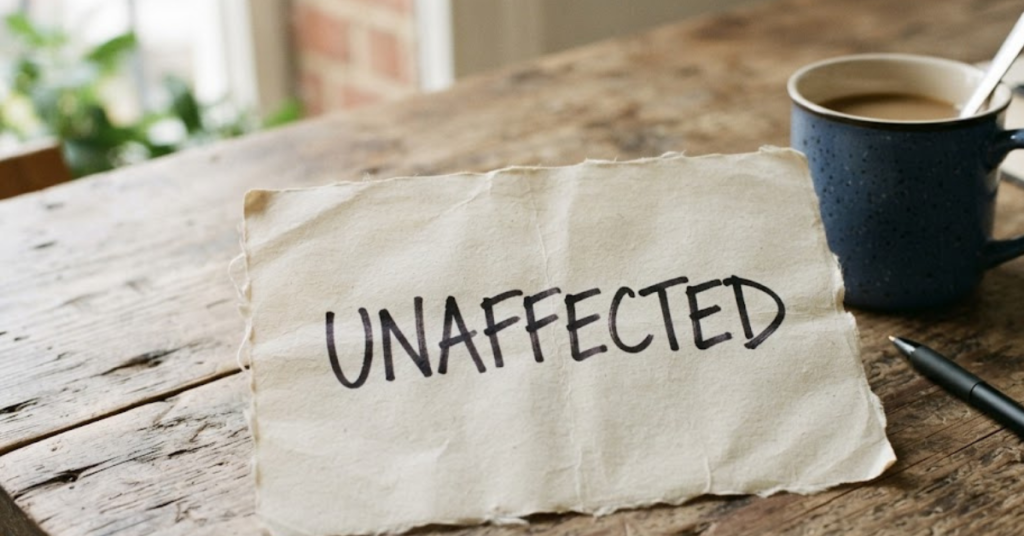
Unaffected
The spelling:
Uneffected
is not a standard English word.
Unaffected is an adjective that means not influenced, not changed, not harmed, or natural and genuine.
Examples:
- The nearby towns remained unaffected by the storm.
- She appeared unaffected by the criticism.
- Our travel plans were unaffected by the delay.
Whenever you want to describe something that has not been influenced or changed, unaffected is the correct choice.
What Does Unaffected Mean?
The word unaffected has several related meanings depending on the context.
1. Not Changed or Influenced
This is the most common meaning.
Examples:
- Sales were unaffected by the price increase.
- The building was unaffected by the earthquake.
2. Not Harmed
Examples:
- Fortunately, no neighboring homes were affected, and several remained unaffected.
- The protected wildlife area was unaffected by the wildfire.
3. Natural or Genuine
In some contexts, unaffected describes someone whose behavior is sincere rather than artificial.
Examples:
- She remained calm and unaffected despite the attention.
- His friendly personality is completely unaffected.
Is Uneffected a Real Word?
Many people search for uneffected because they assume it’s the opposite of effected.
However:
- Uneffected is not a standard English word.
- Dictionaries recognize unaffected, not uneffected, for the meaning “not influenced” or “not changed.”
The confusion usually arises because people mix up the verbs affect and effect, which are themselves commonly confused.
Why Do People Write “Uneffected”?
There are several reasons.
1. Affect vs. Effect Confusion
Many English learners—and even native speakers—struggle to remember the difference between affect and effect.
Since effected is occasionally used as the past participle of the verb effect (meaning “to bring about”), some writers mistakenly assume uneffected should also exist.
2. Similar Pronunciation
The words affected, effected, and unaffected sound similar in everyday speech, making spelling mistakes more likely.
3. Typing Errors
Fast typing and autocorrect mistakes also contribute to the popularity of uneffected in online searches.
Unaffected vs. Affected
Understanding the opposite word helps clarify the meaning.
| Word | Meaning |
| Affected | Changed, influenced, or impacted |
| Unaffected | Not changed, not influenced, or not harmed |
Examples:
- The storm affected thousands of homes.
- Nearby villages remained unaffected.
Common Examples of Unaffected
Everyday Conversation
- I was unaffected by the rumor.
- She seemed completely unaffected by the criticism.
Weather
- The northern region remained unaffected by flooding.
- Flights from the neighboring airport were unaffected.
Business
- Company profits were largely unaffected by market changes.
- Customer demand remained unaffected despite higher prices.
Healthcare
- Fortunately, healthy tissue remained unaffected.
- Most participants were unaffected by the treatment.
Grammar Tip: How to Use Unaffected
Unaffected is an adjective.
It describes a noun by indicating that it has not changed or been influenced.
Examples:
- The results were unaffected.
- The children remained unaffected by the noise.
- Her decision was unaffected by outside opinions.
Because it functions as an adjective, it often follows linking verbs like is, was, seemed, remained, and became.
Memory Trick to Remember the Correct Spelling
Here’s an easy way to remember it:
If something isn’t affected, it’s unaffected.
Notice that unaffected simply adds the prefix un- to the existing word affected.
Think:
- Affected → Unaffected
Not:
- Effected → Uneffected
This simple connection makes the correct spelling much easier to remember.
Common Mistakes to Avoid
Avoid these incorrect spellings:
- Uneffected
- Unaffacted
- Uneffacted
- Unaffecteded
Correct spelling:
- Unaffected
When proofreading, double-check words related to affect and effect, as they are among the most commonly confused words in English.
Frequently Asked Questions (FAQs)
Is it uneffected or unaffected?
Unaffected is the correct spelling. Uneffected is a misspelling and is not recognized as a standard English word.
What does unaffected mean?
Unaffected means not influenced, not changed, not harmed, or natural and genuine.
Is uneffected a real word?
No. Uneffected is not recognized in standard English dictionaries.
Why do people write uneffected?
The mistake usually happens because of confusion between affect and effect, which are commonly mixed up.
How do you use unaffected in a sentence?
Examples:
- The road remained unaffected by the storm.
- She appeared unaffected by the criticism.
What is the opposite of unaffected?
The opposite is affected, meaning influenced, changed, or impacted.
Is unaffected an adjective?
Yes. Unaffected is an adjective describing someone or something that has not been influenced or changed.
Conclusion
When comparing uneffected or unaffected, the correct choice is always unaffected. It is the standard English adjective used to describe someone or something that has not been influenced, changed, harmed, or emotionally impacted. Although uneffected appears in online searches and occasional writing, it is simply a misspelling and should be avoided in both formal and informal communication.
A simple way to remember the correct spelling is to think of affected and then add the prefix un-. By using unaffected consistently, you’ll improve the accuracy, professionalism, and clarity of your writing, whether you’re preparing a business report, academic paper, email, or blog post.
If you found this guide helpful, explore our other grammar and vocabulary articles to learn more about commonly confused English words and become a more confident writer.